Ursu Arctos Horribilis
Grizzly Bear
The grizzly bear is also known as the North American brown bear or simply grizzly. It is a subspecies of brown bear that inhabits North America. The name was first given to these bears by Meriwether Lewis and William Clark. They described it as grisley, which could be interpreted as “grizzly” (as in grizzled with silver-tipped hair) or “grisly” (meaning gruesome). They were formally classified in 1815 as Ursus horribiis by naturalist George Ord for its character. I think it has one of the most unique scientific classifications on the planet. URSUS ARCTOS HORRIBILIS!!! Cue dramatic music.
Size
Grizzly bears are some of the largest subspecies of brown bears. The only bears larger are the Kamchatka brown bears and the Kodiak bears in Alaska. Bears inhabiting the coastal areas tend to be much larger than inland bears. Coastal grizzlies on the Alaskan peninsula can weigh close to 1000 pounds, while inland grizzlies are much smaller and closer in weight to the American Black Bear. Bears in the Greater Yellowstone Ecosystem can weigh between 300-700 pounds. Interestingly, newborn grizzly bears weigh only 18 ounces. I find it fascinating they can grow to be such large and majestic predators.
Characteristics
Grizzly bears can vary in color from blonde to almost jet black, but they are typically brown with darker fur on their legs. As they age, grizzlies can get blonde or white tipped fur on their flank and back giving them that silver-tipped appearance.
There are very definite differences between black bears and grizzly bears. It’s super important, if you choose to hike in the backcountry, to know the differences. The two different species behave differently when they encounter humans. And, likewise, humans need to behave differently when encountering bears.
The following chart shows the basic differences between the black bear and the grizzly bear.
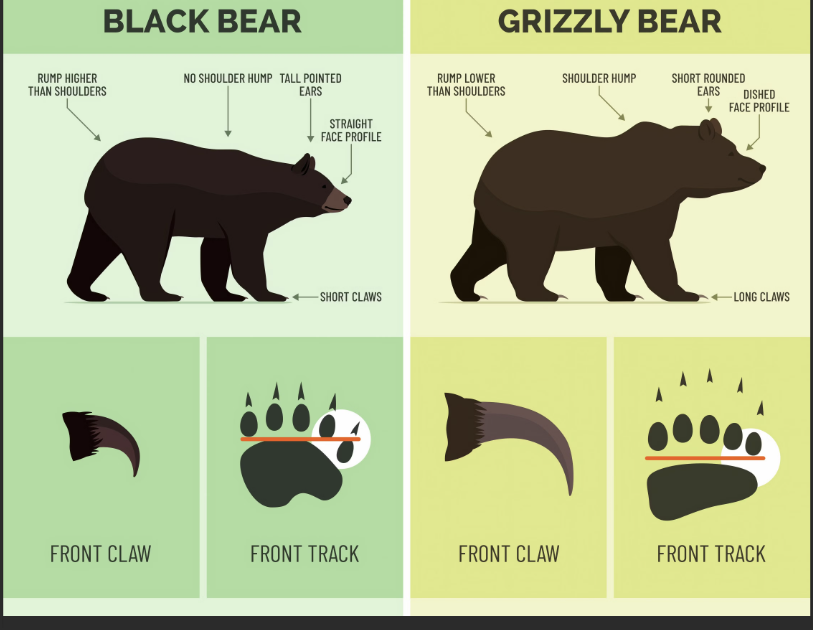
There was a black bear in the northern range of Yellowstone National Park early this spring and summer that people really struggled to identify. There were a lot of posts of Facebook asking, “Is this a black bear or a grizzly bear?!?” I have observed lots of black and grizzly bears over the years, and this one definitely challenged me. (No, I am not claiming to be a bear expert. But I am well-schooled thanks to years of observation and lots of studying.) He was large and had an interesting rust colored, long and shaggy coat. The coat gave the appearance of a hump on his shoulders fooling a lot of people. The key to identifying him was to look at his face and ears. He had a straight face profile and NOT a dished face.
Range
In North America, grizzlies previously ranged from Alaska to Mexico. They were present as far east as Hudson Bay. They are currently found in Alaska, Western Canada, Washington, Idaho, Montana and Wyoming. There have been rumors of grizzlies or grizzly hybrids being present in Colorado. I have word of mouth from my brother-in-law about the hybrid. He lives in the National Forest during the summer months, and I’m not going to argue. This is not scientifically verified, but interesting, nonetheless. (Remember marijuana is legal in Colorado, and mushrooms grow wild. Just saying…)
There are approximately 15,000 bears in Canada. As of 2022, there were an estimated 962 grizzlies in the Greater Yellowstone Ecosystem. As of this writing, there is research and counting and tagging operations on-going in Yellowstone National Park.
PERSONAL ENCOUNTERS
The first grizzly I saw was in Yellowstone National Park with my husband at the time, and still a very dear friend, Tony. We visited Yellowstone for the first time in the 1990s. I am not good with dates, but Evenflow by Pearl Jam was popular. So, I am thinking it was in the early to mid-1990s. (Tony will reply to this blog and correct my dates!)
We were driving up Dunraven Pass in Yellowstone and came around the curve at Chittenden Road. There was a TON of cars pulled over, and we knew it was a bear jam. (You can usually tell what animal is being observed by the number of cars pulled over and whether people are acting insanely.) We jumped out of the truck (Tony forgot to set the brake) and hustled over to watch the most beautiful, young brown grizzly grazing in purple flowers. We were scolded for running and getting too close by a woman who became a lifelong friend. She is a local photographer and sent us a gorgeous photo of this grizzly. Tony still has the photo on his desk.
I am convinced that bear was the legendary bear who went on to be known as Scarface. He lived a long and legendary life but was ultimately killed illegally. A damn shame for such a majestic creature. The last time I saw and photographed him was in that very same area. The next year, he was dead.
Another bear we observed for several years was #264. (I should explain that bears are captured, tagged and often collared for research purposes. This is how she got the number 264.) She was a beautiful bear and a great mom. We got to see her give her cubs their first swimming lesson on the west side of the park one year. One of my two prized photographs I’ve taken in Yellowstone is of 264, and I have it hanging in our dining room. She brought so much joy to so many. 264 was, unfortunately, struck by a truck and killed on the road one season. Tributes went up all around the park and gateway communities. She was fantastic.
I have had so many wonderful grizzly bear sightings over the years. I’d like to briefly touch base on one, but she deserves an entire post of her own. Grizzly 399, The Queen of the Tetons. She was the most famous bear in the world. When she passed away, I sobbed like I had lost my best friend. As I write this, I am fighting back tears. She was everything to the bear world in Grand Teton National Park. And everything to Thomas Mangelsen. He is one of the most amazing wildlife and nature photographers of our time and followed 399 for all of her 28 years. It’s so difficult not to anthropomorphize these animals. We all did that with 399, and her loss was devasting.
The grizzly represents a great recovery effort. It is still listed as “threatened” under the endangered species act. There are constant political battles to remove it from that list to open hunting seasons on grizzlies. There is already a hunting season for black bears. Perhaps in a later post I will address my views on this subject.
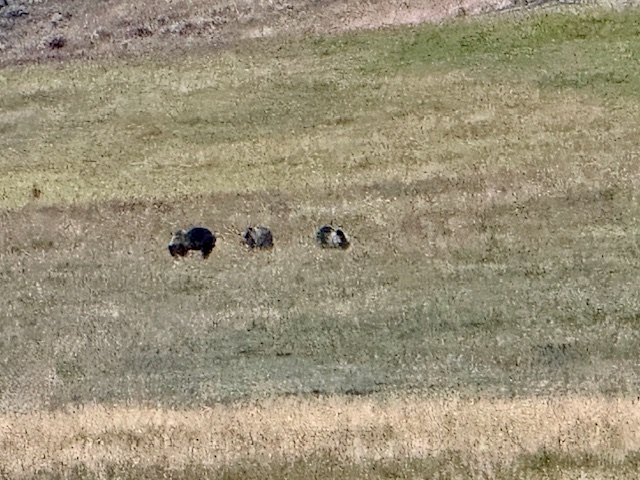
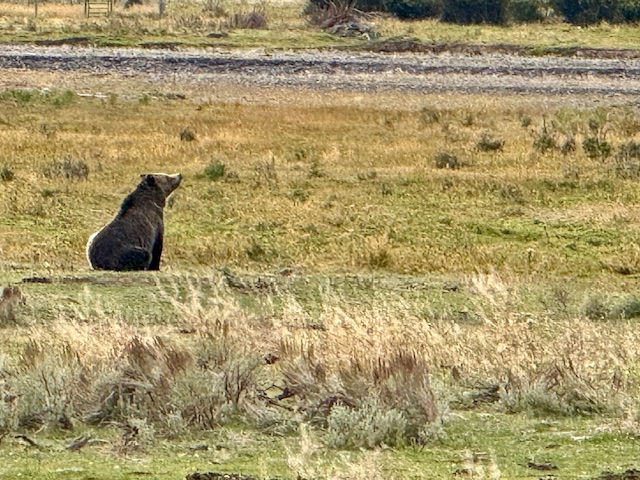
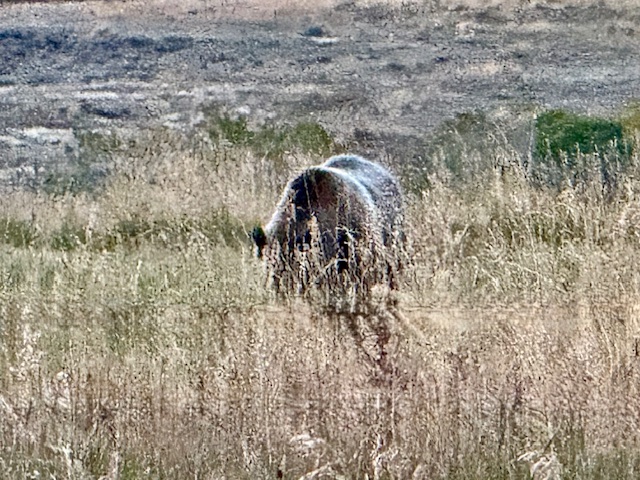
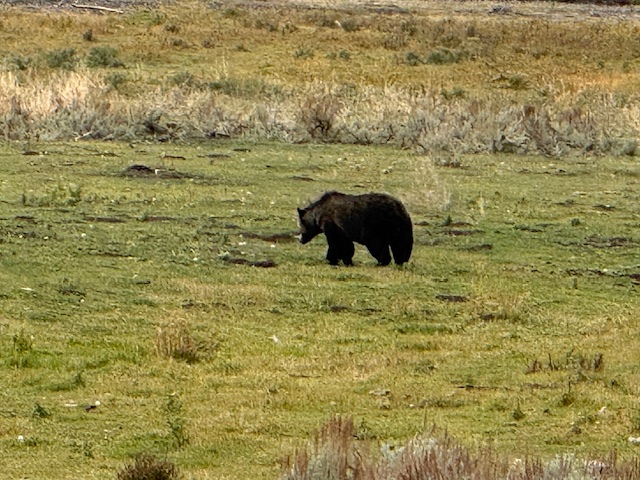
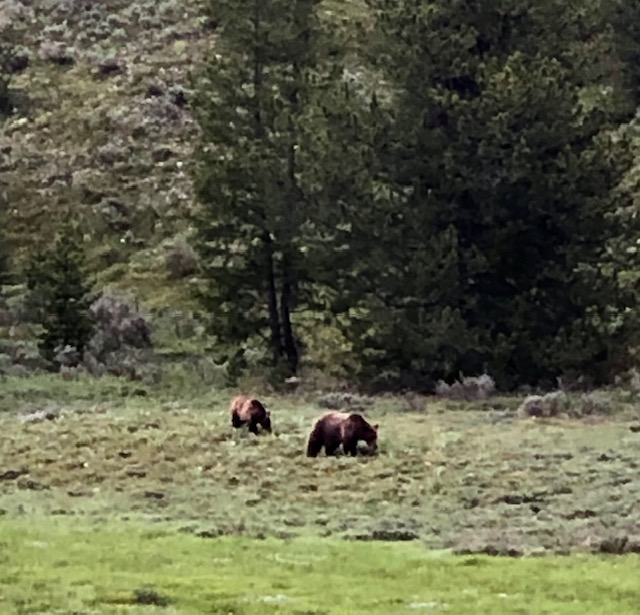
Below are some of the photographs I have taken of grizzlies in the last two years.
Comments
2 responses to “Ursus Arctos Horribilis”
Great post. I hope we continue to grant them the wilderness they need to survive.
Me too. Thank goodness for Vital Ground!!!