The American Bison (Bison bison), also known as the American buffalo, is endemic to North America. Evidence suggests they were roaming the land in 9000 BC. Historically, they lived in the Great Bison Belt which spanned from Alaska to the Gulf of Mexico. There are two subspecies of bison: the plains bison and its larger cousin the wood bison.
Bison once roamed in large herds with an estimated population of around 65 million in the late 18th century. Due to commercial hunting, slaughter and the introduction of bovine diseases, the species became nearly extinct in the 19th century. By 1889, the population was down to just 541 animals. By 1902, poachers had reduced the population in Yellowstone National Park to 25 animals.
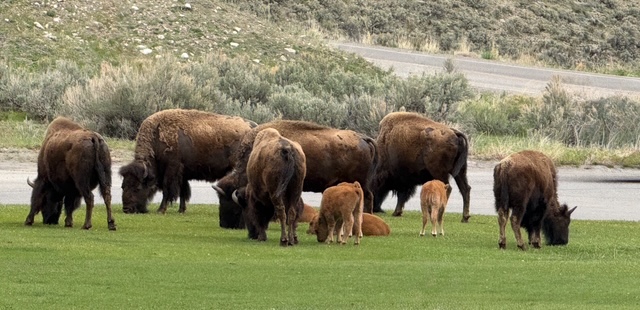
Yellowstone is the only place in the United States where bison have lived continuously since prehistoric times. Conservation efforts began in 1901. Congress appropriated $15,000 to augment the herd. 21 bison were purchased from private owners. They were fed and bred at Lamar Buffalo Ranch in the Lamar Valley in Yellowstone. They were eventually released into the park to interact and breed with the free-roaming population. In 2024, the population was estimated at 5,400. This is a huge conservation success!!
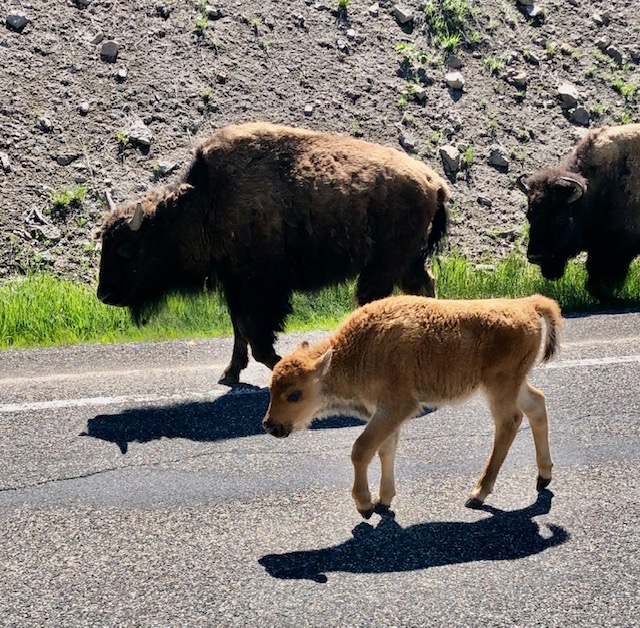
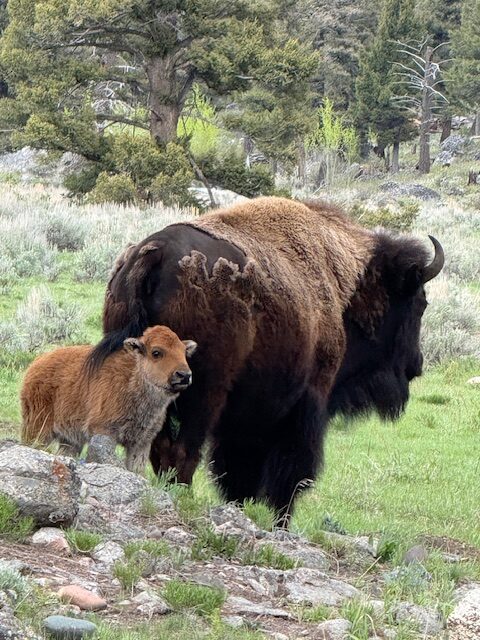
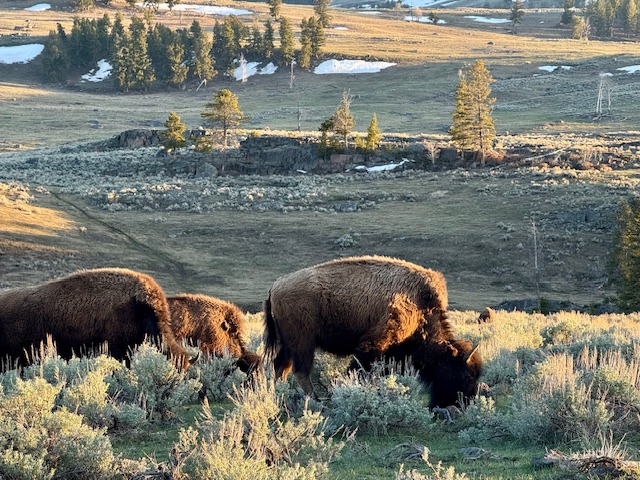
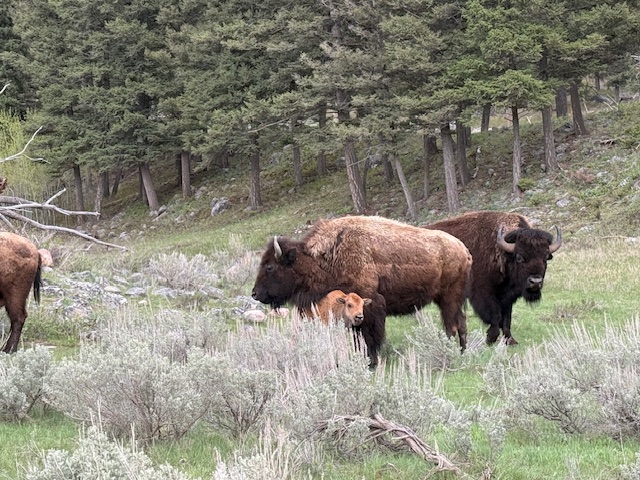
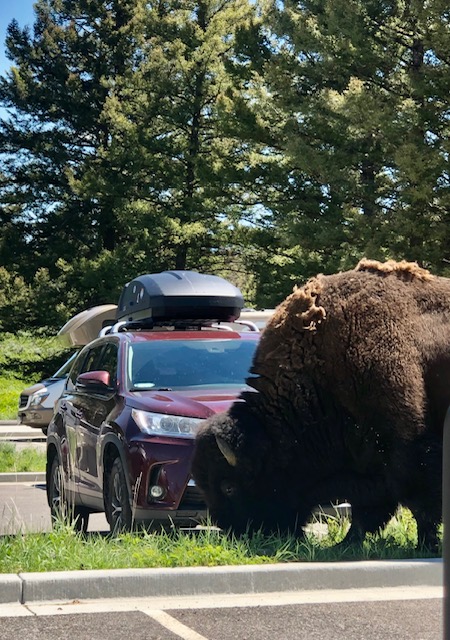
Males (bulls) can weigh in at 2,000 pounds, while females (cows) weigh in at around 1,000 pounds. They usually live 12-15 years but can live up to 20 years. They graze on grasses and sedges. They can be seen in the grassland areas of the park in summer such as Hayden Valley and Lamar Valley. They migrate to warmer, thermal areas in winter which include Mammoth Hot Springs, Norris Geyser Basin and Old Faithful. Mating occurs in late July through August, and calves are born in late April to May. They may appear to be docile and slow, but do not be fooled. They are extremely agile and can be easily irritated. They can run up to 30 miles per hour. Every year in Yellowstone there are human/bison encounters. People have been attacked, gored and even killed by bison. They are not fluffy Highland Cows, so don’t pet them.
(All information comes from NPS handouts and websites.)
Comments
3 responses to “Bison bison”
I love American buffalos, such a resilient and majestic animal. I am thankful for those who have invested their time and personal resources to the conservation of these animals. Thank you Brenda for teaching us about the history, migration, and characteristics of buffalos; that along with your wonderful pics, makes me appreciate even more what nature has to offer in our National Parks. Can’t wait to make it to Yellowstone 😃
I am looking forward to getting together with you and Kevin! I have so much information to share with you about visiting this amazing place. Thanks so much for your comment and for reading!
Looking forward to it!!