The American Black Bear
The black bear is endemic to North America. It has a wide range and can be found in almost all contiguous 48 states. Only the central U.S. states of North Dakota, South Dakota, Nebraska and Kansas are reported to not have populations.
The black bear is significantly smaller than the grizzly bear. Their size and weight vary depending upon age, sex, health, season and habitat. Bears on the east coast are heavier than bears on the west coast, and bears in the northwest are larger than bears in the southeast. Their weight can range from around 125-550 pounds for a male, while females weigh 90-375 pounds.
Black bears are not just black. Their coat covers the color spectrum. They can be white, blonde, cinnamon, light or dark brown, and jet black. Only 50% of the black bears in the Rocky Mountains are black. I saw a gorgeous black bear this spring that was cinnamon in color. White- and cream-colored black bears are found in the coastal areas of British Columbia and are known as Spirit Bears. They are a subspecies of the American Black Bear.
Black bears prefer areas that are mountainous and heavily vegetated. They are EXCELLENT climbers!! I have made the rookie mistake of only looking on the ground for black bears – then to look up and see two cubs asleep in a tree while mom was out feeding. They are omnivorous and consume plants, fruit and berries, insects, small mammals and carrion. Autumn in the Rockies is berry season. I have spent MANY hours observing black bears on the Moose-Wilson Road in Grand Teton National Park feasting on Hawthorne Berries.
They are typically solitary and do not seek out interactions with humans. However, as I have said before, there is a saying “A fed bear is a dead bear”. This applies to ALL species of bears. They are somewhat opportunistic and will go where they have found food before. So, cleanliness is terribly important in any wilderness area. When bears become too comfortable around people, they gain the label of “habituated”. This is often a death sentence. There was a black bear I observed on many occasions in the northern range around the Blacktail Deer Creek drainage of Yellowstone this spring. That bear was eventually euthanized on July 11th. She reportedly crushed an unoccupied tent and climbed a food storage pole to consume human food. This posed a clear threat to humans, and the decision (albeit a very difficult one) was made to remove her from the ecosystem. The campers over the season had done nothing wrong. The bear saw an opportunity, took it, and it cost her her life.
They breed in the summer from June through August. Like, grizzly bears, they have delayed implantation of the fertilized egg. It is suspended until the fall. It then attaches to the uterus and pregnancy begins. Why? This allows the female to boost her body fat before she enters the den. This serves her babies well over the winter. The cubs are born in late winter and weigh in at only 8-12 ounces!!! The are born without teeth, are blind, and only have a small amount of very fine hair covering them.
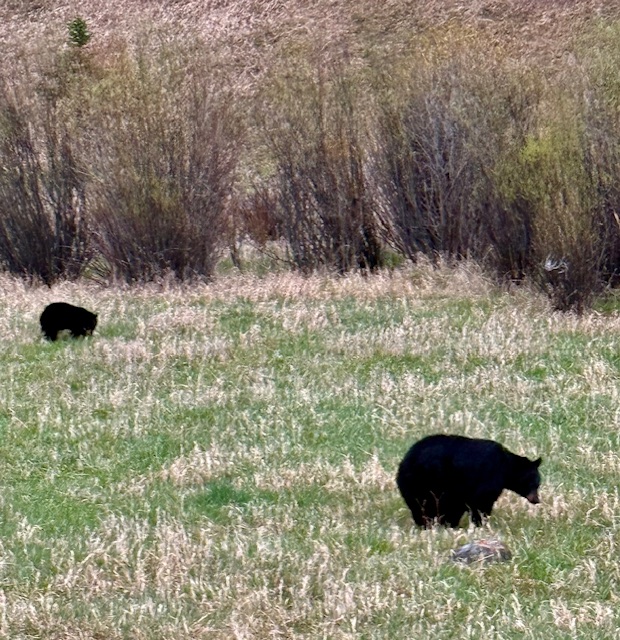
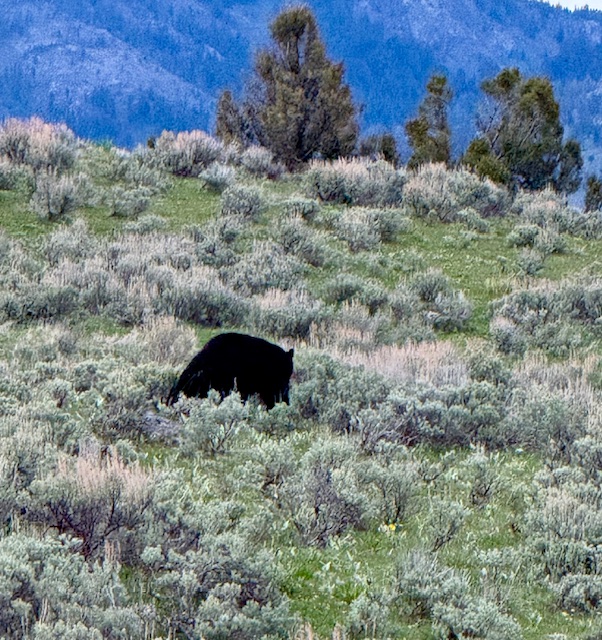
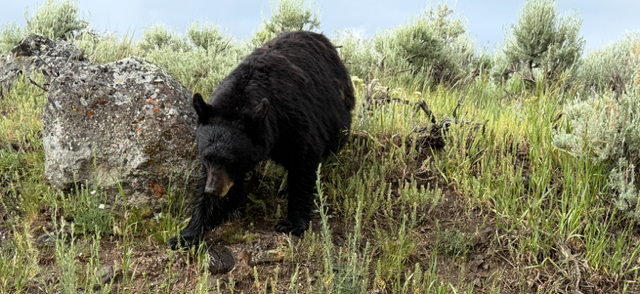
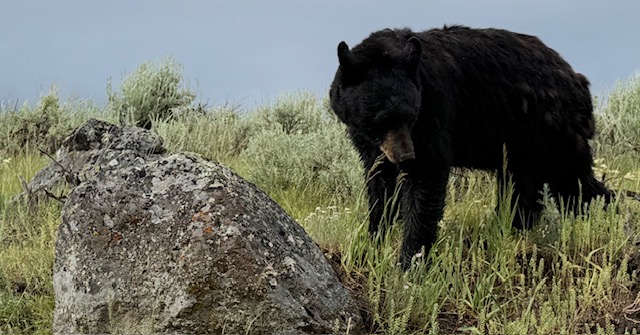
Newborn cubs are called cubs of the year or COYS. One year old cubs are called yearlings. They typically stay with mom until they are two, at which point she’ll kick them off so she can breed again. Spring and early summer in Yellowstone are magical! I have included some of the moments I had with black bears this season! Enjoy!
Please feel free to ask questions in the comment section. While I am not an expert – I am blessed to know PLENTY who are in the area!!!
Comments
2 responses to “Ursus Americanus”
Excellent information and great photos!
Thanks!!